
9 Reasons You May Need an Air Ambulance (Emergency & International Cases)

Updated: Feb 12

Medical emergencies don’t always happen near advanced hospitals—or even within your home country. In many situations, ground transport or commercial flights simply aren’t safe. This is where an international air ambulance becomes a life-saving solution.
Whether due to sudden trauma, serious illness abroad, or the need for rapid medical evacuation, understanding when and why air ambulance services are necessary can help families make fast, informed decisions during critical moments.
This guide explains the nine most common reasons people require air medical transport services, covering both emergency and international cases in 2026 and beyond.
What Is an Air Ambulance?
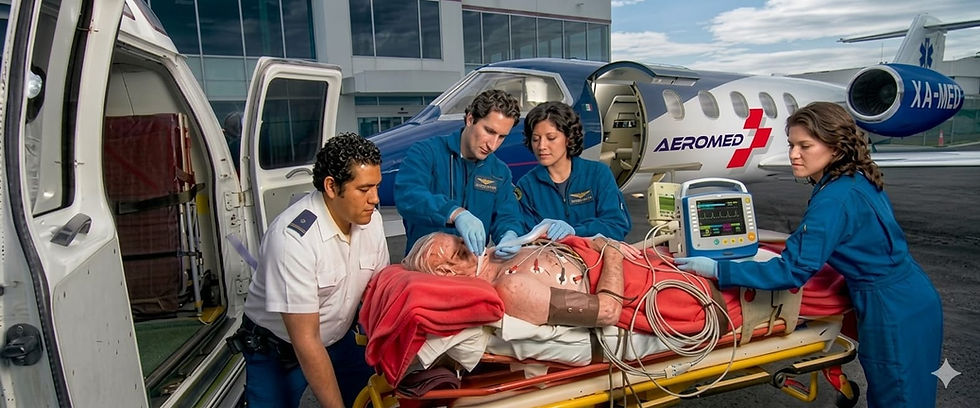
An air ambulance is a medically equipped aircraft designed to transport critically ill or injured patients while providing continuous medical care during flight.
Unlike standard aircraft, air ambulances function as flying intensive care units (ICUs), staffed with experienced medical professionals and advanced life-support equipment. These services are commonly used for global medical evacuation, emergency response, and long-distance patient repatriation.
Why Would Someone Need an Air Ambulance?
People need air ambulances when:
Immediate medical care is required during transport
Local healthcare facilities are inadequate
Commercial flights are unsafe due to medical instability
Time-critical treatment is essential
Below are the nine most common reasons air ambulance transport becomes medically necessary.
1. Life-Threatening Trauma or Severe Injury
When does trauma require air ambulance transport?
Severe injuries such as:
Head or spinal trauma
Multiple fractures
Internal bleeding
Crush injuries
Severe burns
often require rapid access to advanced trauma centers.
Why ground transport may not be enough
In remote areas or international locations, ground ambulances may be too slow or poorly equipped. Emergency air ambulance solutions ensure faster transport while providing continuous monitoring and emergency intervention.
2. Medical Emergencies While Traveling Internationally
What happens if you get seriously ill abroad?
Travelers may experience:
Heart attacks
Strokes
Severe infections
Complications from chronic conditions
In some countries, advanced medical care may be limited or unavailable. International air ambulance services enable patients to be transported safely to hospitals with appropriate expertise.
This is one of the most common reasons for global medical evacuation.
3. Need for Intensive Care During Transport
What if a patient needs ICU-level care in flight?
Patients requiring:
Mechanical ventilation
Continuous cardiac monitoring
IV medication infusions
Advanced airway management
cannot safely travel on commercial flights. Critical care flight transport provides the necessary medical environment to keep patients stable during long-distance travel.
4. Remote or Hard-to-Reach Locations
Why are air ambulances essential in remote areas?
Accidents and medical emergencies often occur in:
Rural regions
Islands
Mountains
Offshore work sites
Disaster zones
In these cases, air ambulances may be the only viable option for reaching advanced medical care quickly. Helicopter or fixed-wing aircraft ensure rapid evacuation when ground access is limited.
5. Stroke or Cardiac Emergencies
Why is speed critical for strokes and heart attacks?
Conditions like strokes and heart attacks are extremely time-sensitive. Delays in treatment can lead to:
Permanent disability
Organ damage
Increased mortality risk
Air ambulance transport reduces transfer time and allows medical teams to begin treatment immediately, improving patient outcomes.
6. Inadequate Local Medical Facilities
What if the local hospital cannot provide proper care?
In many regions—especially during international travel—local hospitals may lack:
Specialized physicians
Advanced imaging
Surgical capabilities
ICU resources
An air medical transport service allows patients to be transferred to facilities equipped to handle complex or critical conditions, ensuring continuity of care.
7. Post-Surgical or Complex Medical Transfers
Can patients fly after surgery?
Patients recovering from major surgeries such as:
Brain surgery
Cardiac surgery
Organ transplants
Orthopedic trauma surgery
often require monitored transport. Air ambulances provide controlled cabin pressure, medical staffing, and equipment necessary for safe post-operative travel.
8. Pediatric and Neonatal Emergencies
Why do infants and children need specialized air transport?
Newborns and children have unique medical needs. Neonatal and pediatric air ambulance teams are trained to manage:
Premature infants
Congenital conditions
Respiratory distress
Pediatric trauma
Commercial flights are rarely appropriate in these cases. Emergency air ambulance solutions ensure safe and specialized care for vulnerable patients.
9. Medical Repatriation to Home Country
What is medical repatriation?
Medical repatriation involves transporting a patient back to their home country for continued treatment or recovery.
This may be necessary when:
Long-term care is needed
Insurance coverage is location-specific
Family support is essential for recovery
International air ambulance services provide bedside-to-bedside care, managing medical logistics, customs clearance, and coordination with receiving hospitals.
Are Commercial Flights Ever an Option?
In some cases, medically stable patients may travel with a commercial medical escort. However, air ambulances are recommended when:
The patient’s condition is unstable
ICU-level care is required
The risk of deterioration is high
Immediate medical intervention may be needed
When in doubt, physicians typically recommend air ambulance transport for safety.
How Do Doctors Decide If an Air Ambulance Is Necessary?
Medical professionals evaluate:
Vital signs and stability
Oxygen and ventilation needs
Risk of complications during flight
Distance and travel duration
Available medical facilities
Reputable air medical providers conduct thorough medical reviews before recommending transport.
Medical Air Rescue Services
When serious illness or injury requires rapid, specialized transport, professional medical air rescue services are essential. Providers like Aeromed Air Rescue deliver international air ambulance and air medical transport services for critically ill or injured patients worldwide. With advanced medical aircraft, experienced critical care teams, and coordinated global medical evacuation support, they provide reliable emergency air ambulance solutions focused on patient safety and continuity of care.
When an Air Ambulance Becomes Essential
Air ambulances are not just a convenience - they are a medical necessity in many emergency and international situations. From severe trauma and cardiac events to inadequate local care and complex medical transfers, air medical transport services save lives by delivering timely, specialized care in the air.
If a patient’s condition is unstable, time-critical, or beyond the capabilities of local healthcare, choosing an international air ambulance ensures the highest level of safety and medical support. In moments when every minute matters, critical care flight transport can make the difference between recovery and irreversible harm.