
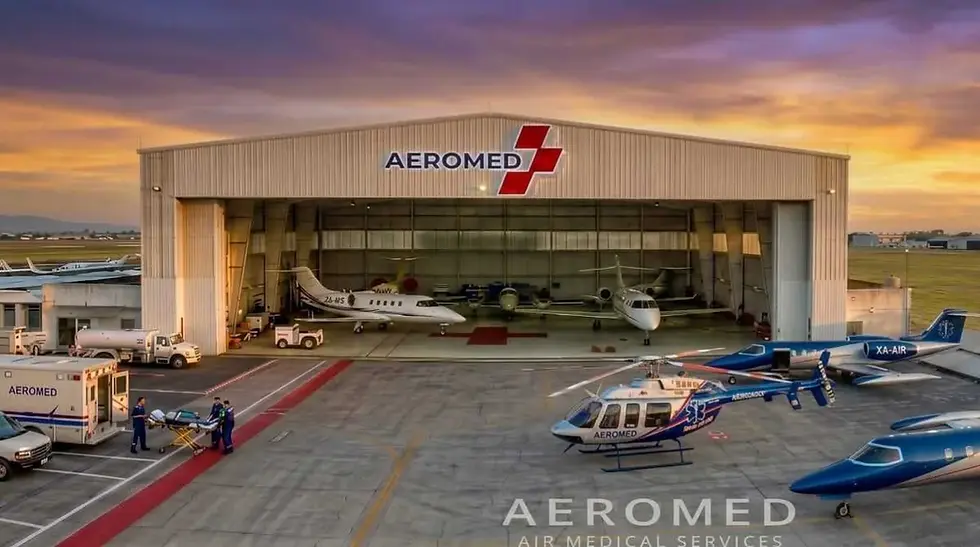
The Evolution of Air Medical Transport in Modern Healthcare

Updated: Apr 2
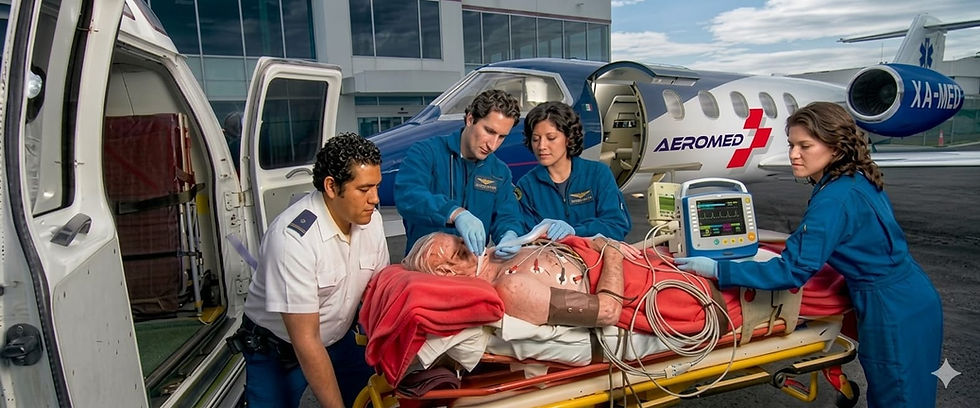
The ability to transport critically ill or injured patients quickly and safely has transformed healthcare delivery worldwide. Air medical transport, once a niche service, has evolved into a vital component of modern emergency and critical care systems. Today, it bridges geographical barriers, connects patients to specialized treatment, and improves survival rates across diverse medical scenarios.
This article explores how air medical transport has evolved over time and why it plays an increasingly important role in modern healthcare.
What Is Air Medical Transport?
Air medical transport refers to the use of aircraft such as helicopters and fixed-wing jets to move patients who require urgent or specialized medical care. These aircraft are equipped with advanced life-support systems and staffed by trained medical professionals.
Services typically include:
Emergency medical evacuations
Inter-hospital transfers
International repatriation
Remote area rescues
Providers like Aeromed Air Rescue deliver comprehensive bedside-to-bedside care, ensuring continuous monitoring throughout the journey.
Early Beginnings of Air Medical Transport
The origins of air medical transport date back to military operations, where aircraft were used to evacuate injured soldiers from battlefields. Early systems were basic, with limited medical equipment and minimal in-flight care.
Over time, civilian healthcare systems adopted similar methods, gradually improving the quality of care provided during transport.
Growth and Development in Civilian Healthcare
As aviation technology advanced, air medical transport became more accessible and effective. Key developments included:
Introduction of helicopter emergency medical services (HEMS)
Expansion of fixed-wing aircraft for long-distance transport
Integration of trained medical personnel onboard
These advancements allowed patients to receive faster and more reliable care, particularly in rural and underserved areas.
How Do Modern Air Medical Transport Systems Save Lives?
Today’s air ambulance services are highly sophisticated. Aircraft are equipped with ICU-level technology, allowing medical teams to deliver advanced care during transport.
Key Features of Modern Systems
Advanced life-support equipment
Continuous patient monitoring
Specialized medical teams
Global coordination capabilities
Organizations like Aeromed Air Rescue exemplify these advancements, offering international medical transport with high standards of care.
Global Growth of Air Medical Transport
Region | Estimated Growth Rate |
North America | 8% annually |
Europe | 7% annually |
Asia-Pacific | 10% annually |
Latin America | 9% annually |
Middle East & Africa | 8% annually |
The steady growth reflects increasing demand for rapid medical response and specialized care.
The Digital Revolution in Emergency Medical Services
Technology has played a major role in transforming air medical transport. Key innovations include:
1. Advanced Medical Equipment
Modern air ambulances are equipped with:
Ventilators
Cardiac monitors
Infusion pumps
Portable diagnostic tools
These tools allow medical teams to manage critical conditions effectively during flight.
2. Improved Aircraft Capabilities
Advances in aviation technology have improved:
Flight range and speed
Fuel efficiency
Cabin pressurization for patient comfort
This enables safer and more efficient long-distance transport.
3. Telemedicine Integration
Telemedicine allows medical teams to communicate with ground-based specialists in real time, improving decision-making during transport.
Cost Trends in Air Medical Transport
Service Type | Estimated Cost (USD) |
Helicopter Transport | $5,000 – $25,000 |
Domestic Fixed-Wing | $10,000 – $50,000 |
Short International | $30,000 – $100,000 |
Long-Distance International | $100,000 – $500,000+ |
While costs remain high, increasing insurance coverage and awareness are making these services more accessible.
Role in Modern Healthcare Systems
Air medical transport is now an integral part of healthcare systems worldwide. It supports:
Emergency response networks
Trauma care systems
Specialized medical treatment access
Disaster response efforts
By reducing transport time and improving access to care, air ambulances contribute significantly to better patient outcomes.
Challenges in Air Medical Transport
Despite its advancements, the industry faces several challenges:
High operational costs
Complex regulatory requirements
Weather-related disruptions
Limited availability in some regions
Addressing these challenges is essential for continued growth and accessibility.
Who Needs Air Ambulance Services the Most?
Air medical transport plays a crucial role in saving lives by providing fast, specialized care during critical situations. Here are the key groups that benefit the most:
Critically Ill or Injured Patients
Patients in Remote or Rural Areas
Organ Transplant Patients
Accident and Disaster Victims
Patients Requiring Specialized Care
Elderly and High-Risk Patients
International Medical Travelers
These services ensure that patients receive timely and appropriate treatment regardless of location.
The Next Era of Global Air Medical Transport
The future of air medical transport looks promising, with continued advancements expected in:
Medical technology
Aircraft design
Global coordination systems
Cost efficiency
As healthcare becomes more globalized, the demand for air ambulance services will continue to rise.
The Role of Experienced Providers
Experienced providers like Aeromed Air Rescue play a critical role in shaping the future of air medical transport. Their expertise ensures:
Rapid response times
High-quality medical care
Reliable global operations
Seamless patient transfers
Transforming Emergency Care Across the Globe
The evolution of air medical transport reflects the changing needs of modern healthcare. From its early beginnings in military operations to today’s advanced global systems, air ambulance services have become indispensable in saving lives and improving patient outcomes.
By combining cutting-edge technology, skilled medical teams, and efficient logistics, air medical transport continues to redefine how critical care is delivered worldwide.
With trusted providers like Aeromed Air Rescue leading the way, patients can access fast, safe, and reliable medical transport no matter where they are in the world.
FAQs
1. What is air medical transport?
Air medical transport involves using specially equipped aircraft to transfer critically ill or injured patients while providing continuous medical care during the journey.
2. How has air medical transport evolved over time?
It has evolved from basic military evacuations to advanced systems with ICU-level equipment, trained medical teams, and global coordination capabilities.
3. Why is air medical transport important in modern healthcare?
It enables rapid access to specialized medical care, reduces transport time, and improves survival rates for critically ill patients.
4. What equipment is used in modern air ambulances?
Modern air ambulances include ventilators, cardiac monitors, infusion pumps, oxygen systems, and advanced diagnostic tools.
5. Who benefits from air medical transport services?
Critically ill patients, accident victims, travelers abroad, and individuals in remote areas benefit the most from air medical transport.
6. What challenges does the air medical transport industry face?
Challenges include high costs, complex regulations, weather conditions, and limited accessibility in certain regions.