
Fixed-Wing vs. Helicopter Air Ambulance: Which One Do You Need?

Updated: Mar 11

Medical emergencies often require rapid and specialized transportation to ensure patients receive immediate care. In situations where time is critical and distance plays a major role, International Air Ambulance services provide an essential solution for transporting patients safely between hospitals or from remote locations to advanced medical facilities.
Air ambulances combine aviation technology with critical medical expertise. These services include trained medical professionals, advanced life-support equipment, and specially configured aircraft capable of functioning like flying intensive care units. Depending on the situation, the medical transport may be performed using a fixed-wing aircraft or a helicopter.
Understanding the differences between these two types of air ambulances helps patients, families, and healthcare providers determine the most appropriate option for a specific medical emergency.
What Is an Air Ambulance Service?
International Air ambulance services are specialized medical transportation systems designed to move patients quickly while providing continuous medical care during travel. These aircraft are equipped with advanced monitoring systems, ventilators, and other life-support equipment that allow medical teams to stabilize and treat patients throughout the journey.
Medical aviation teams usually include:
Flight physicians
Critical care nurses
Paramedics or respiratory specialists
Aviation crew trained in medical operations
These professionals coordinate closely with hospitals to ensure safe patient transfers. Whether the patient requires a short-distance transfer or long-distance global medical evacuation, air ambulance transport plays a vital role in emergency healthcare systems.
What Is a Helicopter Air Ambulance?
A Helicopter Air Ambulance is typically used for short-distance emergency missions, especially when rapid access to accident scenes or remote areas is required. Helicopters can land in locations where airplanes cannot, such as highways, mountain regions, construction sites, or hospital helipads.
Helicopters are frequently used in emergency situations such as:
Road traffic accidents
Natural disasters or rescue missions
Medical emergencies in rural or mountainous areas
Rapid hospital transfers within a city or region
Because helicopters can take off and land vertically, they are ideal for quick response situations where patients must be transported immediately to the nearest trauma center.
What Is a Fixed-Wing Air Ambulance?
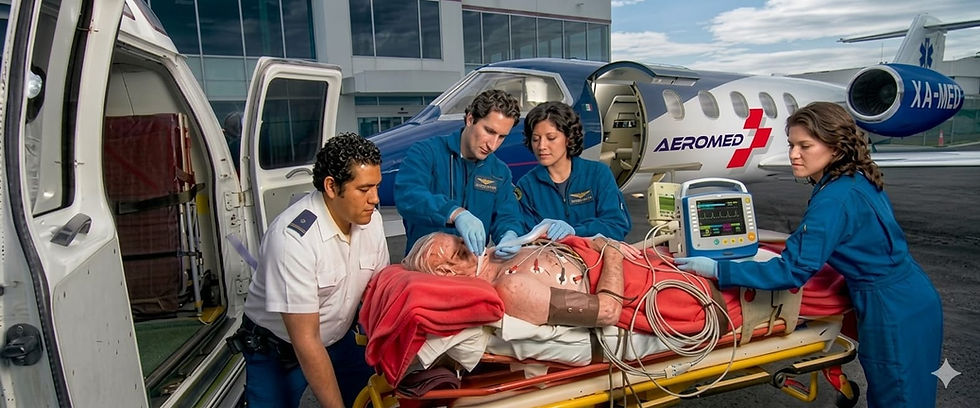
Fixed-wing air ambulances are aircraft such as medical jets or turboprop airplanes designed for long-distance medical transportation. These aircraft operate from airports and are commonly used when patients must travel hundreds or thousands of kilometers.
A fixed-wing aircraft used in air medical transport service missions typically offers:
Longer flight range for international travel
Larger cabin space for medical equipment
Ability to carry multiple medical professionals
Greater comfort for patients on extended journeys
Fixed-wing aircraft are often used for global medical evacuation, international patient transfers, and long-distance hospital transport.
What Are the Key Differences Between Helicopter and Fixed-Wing Air Ambulances?
The choice between helicopter and fixed-wing aircraft depends on several important factors such as distance, location, and the patient’s medical condition.
Helicopter vs Fixed-Wing Air Ambulance Comparison
Feature | Helicopter Air Ambulance | Fixed-Wing Air Ambulance |
Typical Distance | Short distance (50–300 km) | Long distance (300–5,000+ km) |
Landing Locations | Hospitals, roads, remote areas | Airports only |
Speed | Moderate | Faster for long distances |
Cabin Space | Limited medical equipment | Larger ICU-style space |
Mission Type | Emergency response | Long-distance transport |
Both aircraft play essential roles in modern Air Ambulance services, depending on the situation.
When Is a Helicopter Air Ambulance the Best Choice?
Helicopters are often the best option for emergencies that require immediate response and rapid transport to nearby hospitals. Because they can land in confined areas, helicopters can reach accident scenes quickly.
Helicopters are commonly used for:
Trauma response after accidents
Rescue missions in remote terrain
Transfers from accident sites to trauma centers
Medical emergencies in rural communities
These rapid-response missions allow air medical transport service teams to stabilize patients and deliver them quickly to specialized hospitals.
Why Are Airplanes Used for Global Medical Evacuation?
Fixed-wing aircraft are preferred when patients must travel long distances, particularly between cities, regions, or countries. Their extended range makes them ideal for global medical evacuation missions.
Situations where fixed-wing air ambulances are commonly used include:
International patient repatriation
Transfers between distant hospitals
Transportation from islands or remote regions
Medical evacuation during travel abroad
Because they provide more cabin space and advanced medical equipment, fixed-wing aircraft can support critically ill patients during long journeys.
How Fast Are Air Ambulance Flights?
Speed is one of the biggest advantages of air medical transport compared to traditional ground ambulances.
Air Ambulance Transport Time Comparison
Distance | Ground Ambulance | Air Ambulance |
200 km | 2–3 hours | 40–60 minutes |
500 km | 5–6 hours | 1–2 hours |
1,000 km | 10–12 hours | 2–3 hours |
International travel | 24+ hours | 6–12 hours |
This time advantage is crucial for patients who require urgent medical treatment.
What Medical Equipment Is Available on Air Ambulances?
Both helicopter and fixed-wing air ambulances are equipped with advanced medical equipment to support critically ill patients.
Common onboard equipment includes:
Cardiac monitors and defibrillators
Mechanical ventilators
Infusion pumps for medication delivery
Oxygen supply systems
Portable diagnostic equipment
These tools allow medical teams to provide intensive care during air medical transport service missions.
Who Decides Which Air Ambulance Is Used?
The choice between helicopter and fixed-wing aircraft is usually determined by medical professionals and aviation coordinators. Several factors influence this decision.
Important considerations include:
Distance between hospitals
Patient’s medical condition
Urgency of the situation
Availability of airports or helipads
Weather and flight conditions
Medical teams carefully evaluate these factors to determine the safest and most efficient method of transportation.
How Has Demand for Air Ambulance Services Grown?
The demand for air medical transport continues to grow due to global travel, improved healthcare systems, and the need for rapid emergency response.
In many countries, both helicopters and fixed-wing aircraft are integrated into emergency medical systems to ensure patients receive timely care.
Air Ambulance services are now considered an essential component of modern healthcare infrastructure.
Why Are Air Ambulances Important in Emergency Medicine?
Air ambulances provide life-saving support when traditional transportation methods are too slow or inaccessible. Whether used for local rescue missions or long-distance global medical evacuation, these aircraft help ensure patients reach appropriate medical facilities quickly.
By combining aviation technology with advanced medical expertise, air medical transport service providers can deliver continuous care during transport and significantly improve patient outcomes.
Which Air Ambulance Option Is Right for You?
Choosing between a Helicopter Air Ambulance and a fixed-wing aircraft depends on several factors, including distance, urgency, and the patient’s medical condition. Helicopters are ideal for rapid emergency response and short-distance transport from accident scenes or remote areas. Fixed-wing aircraft, on the other hand, are better suited for long-distance hospital transfers and global medical evacuation missions.
Both types of aircraft play critical roles in modern air ambulance services, much like the approach used by leading providers such as Aeromed Air Rescue. They ensure patients receive timely and specialized medical care regardless of location. By understanding the differences between these transport options, families and healthcare providers can make informed decisions when arranging emergency medical transportation
FAQs
What is the difference between a helicopter air ambulance and a fixed-wing air ambulance?
A helicopter air ambulance is used for short-distance emergency transport and can land in confined areas, while a fixed-wing air ambulance is used for long-distance medical flights between airports.
When should a helicopter air ambulance be used?
A helicopter air ambulance is used when a patient must be transported quickly from accident scenes, rural areas, or locations where airplanes cannot land.
When is a fixed-wing air ambulance necessary?
Fixed-wing air ambulances are necessary for long-distance medical transport, international patient transfers, and global medical evacuation missions.
Are helicopter air ambulances faster than ground ambulances?
Yes. Helicopter air ambulances significantly reduce travel time by flying directly to hospitals or trauma centers without road traffic delays.
What medical equipment is available on air ambulance services?
Air ambulance services typically include ICU-level equipment such as ventilators, cardiac monitors, oxygen systems, infusion pumps, and emergency medications.
Who decides whether a helicopter or fixed-wing air ambulance is used?
Medical professionals and flight coordinators evaluate the patient’s condition, distance, and location to determine the most suitable air medical transport service.