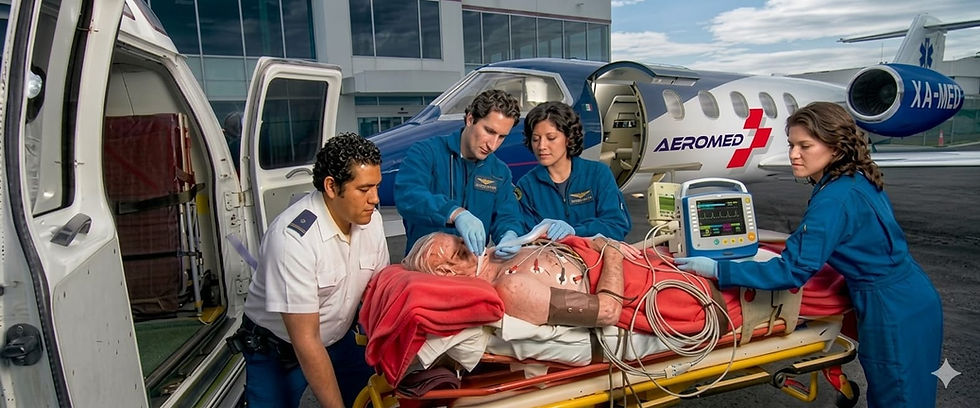

ICU in the Sky: Inside an Air Ambulance Medical Setup


Medical emergencies often require rapid transportation combined with advanced medical care. In critical situations where patients must travel long distances or reach specialized hospitals quickly, air ambulance aircraft provide a life-saving solution. These specialized medical flights function like flying intensive care units, equipped with advanced technology and staffed by highly trained medical professionals.
Air ambulances are designed to stabilize patients during transport while providing continuous monitoring and treatment. Unlike standard aircraft, these planes and helicopters are configured with life-support equipment, emergency medications, and space for medical teams to perform procedures while in the air.
Understanding how an air ambulance is equipped and operated helps patients and families appreciate the level of care provided during these critical missions.
What Is an Air Ambulance Medical Setup?
An air ambulance medical setup refers to the specialized medical equipment and clinical environment installed inside an aircraft used for patient transportation. The goal is to recreate the functionality of a hospital intensive care unit while maintaining safety during flight.
Modern air ambulance cabins include:
Advanced cardiac monitoring systems
Mechanical ventilators
Oxygen delivery systems
Infusion pumps for medication
Portable diagnostic tools
This equipment allows medical teams to monitor vital signs, administer medications, and provide life-saving treatment during the flight.
Many aircraft used in Air Ambulance services are specifically modified to accommodate stretchers, medical equipment racks, and seating for medical personnel.
Why Is an Air Ambulance Called an “ICU in the Sky”?
The phrase “ICU in the Sky” is commonly used because air ambulances replicate the environment of a hospital intensive care unit. Patients who require constant monitoring or life-support systems can safely travel while receiving uninterrupted medical care.
The aircraft interior is carefully organized to allow healthcare professionals to perform medical procedures while maintaining flight safety.
An air medical transport service typically includes:
A flight physician or critical care doctor
A specialized flight nurse
A paramedic or respiratory therapist
These professionals work together to ensure the patient remains stable throughout the journey.
What Medical Technology Is Available Onboard?
The equipment inside an air ambulance is similar to what is found in hospital emergency rooms and ICUs. Every piece of equipment is secured to function safely in the aircraft environment.
Common equipment includes:
Cardiac monitors and defibrillators
Portable ventilators for respiratory support
Infusion pumps for IV medications
Oxygen tanks and delivery systems
Suction devices for airway management
Portable laboratory testing devices
These tools allow medical teams to diagnose and treat patients while traveling between
healthcare facilities.
How Is the Aircraft Configured for Patient Care?
Air ambulance aircraft are specifically designed to accommodate medical equipment and allow easy access to the patient. The interior layout ensures that medical teams can work efficiently during the flight.
Key cabin features include:
Secure stretcher systems
Adjustable lighting for medical procedures
Noise-reducing interiors
Temperature-controlled cabins
Power supply for medical equipment
This configuration transforms the aircraft into a mobile critical care environment.
When Are Air Ambulances Used for International Medical Flights?
In many cases, patients require transportation between countries to receive specialized treatment or return home after hospitalization abroad.
An International Air Ambulance is used when patients must travel across borders while receiving professional medical supervision. These missions often involve long-distance transport between hospitals located in different countries.
International medical flights are commonly arranged for:
Medical repatriation after illness or injury abroad
Transfer to specialized treatment centers
Long-distance patient relocation
Emergency evacuation during travel
These services ensure that patients receive consistent medical care during international journeys.
How Do Medical Teams Manage Long-Distance Patient Transport?
During global medical evacuation, medical teams coordinate complex logistics to move patients safely between countries or continents. These missions require careful planning to ensure the patient receives uninterrupted care.
A typical evacuation process includes:
Medical evaluation and transport planning
Ground ambulance transfer from the hospital
Boarding and aircraft medical setup preparation
Continuous monitoring during the flight
Ground transfer to the destination hospital
This process ensures the patient is safely transported from one hospital bed to another with minimal disruption to medical care.
How Fast Is Air Medical Transport Compared to Ground Ambulances?
Speed is one of the primary advantages of air ambulance transportation, especially when long distances are involved.
Transport Time Comparison
Distance | Ground Ambulance | Air Ambulance |
200 km | 2–3 hours | 45–60 minutes |
500 km | 5–6 hours | 1–2 hours |
1,000 km | 10–12 hours | 2–3 hours |
International travel | 24+ hours | 6–12 hours |
Faster transportation can significantly improve survival rates for critically ill patients.
Growth of Air Medical Transport Worldwide
Air medical transportation has grown significantly in recent years due to increasing global travel and improved emergency response systems.
Global Air Ambulance Market Trends
Year | Estimated Global Market Value |
2020 | $5.4 Billion |
2023 | $7.2 Billion |
2025 | $9.1 Billion |
2030 (Projected) | $13+ Billion |
The growing demand for Air Ambulance services highlights the importance of rapid medical transport in modern healthcare systems.
Who Operates the Medical Equipment During Flight?
Air ambulance flights are staffed by highly trained medical professionals who specialize in critical care transport.
Typical flight teams include:
Critical care physicians
Flight nurses
Paramedics
Respiratory therapists
These professionals receive specialized training in aviation medicine, allowing them to manage complex medical situations while flying at high altitudes.
Their expertise ensures that patients receive the same level of care they would receive in a hospital ICU.
How Safe Are Air Ambulance Medical Flights?
Air ambulance operations follow strict aviation and medical safety regulations. Aircraft are maintained according to aviation authority standards, and medical teams follow clinical protocols designed for transport medicine.
Safety measures include:
Advanced patient monitoring systems
Specialized training for flight medical teams
Aircraft designed for medical operations
Continuous communication with hospitals
These procedures ensure that patients receive safe and reliable medical transport.
Why Air Ambulances Are Essential for Critical Care Transport
Air ambulances play a crucial role in modern emergency medicine by combining aviation technology with advanced healthcare capabilities. Whether used for regional hospital transfers or global medical evacuation, these aircraft ensure patients receive rapid access to specialized treatment.
With the ability to function as a flying intensive care unit, air ambulances provide life-saving support for patients who cannot travel using traditional transportation methods.
Advanced Care During Air Transport
The concept of an ICU in the Sky accurately describes the advanced medical environment inside an air ambulance. These aircraft, operated by providers like Aeromed Air Rescue, are equipped with life-support systems, sophisticated monitoring equipment, and highly trained medical teams capable of providing critical care during flight.
From short regional transfers to long-distance International Air Ambulance missions, these specialized aircraft ensure that patients receive uninterrupted treatment while traveling to the medical facility they need.
As demand for rapid medical transportation continues to grow, Air Ambulance services, including Aeromed Air Rescue, will remain a vital part of global healthcare systems, delivering advanced care when time and distance matter most.
FAQs
What does “ICU in the sky” mean in air ambulance services?
“ICU in the sky” refers to air ambulance aircraft equipped with intensive care unit medical equipment and staffed by trained medical professionals who provide critical care during flight.
What equipment is available in an air ambulance?
Air ambulances typically include ventilators, cardiac monitors, defibrillators, infusion pumps, oxygen systems, and emergency medications to provide continuous patient care during transport.
Who provides medical care during an air ambulance flight?
Air ambulance flights are staffed by trained professionals such as critical care physicians, flight nurses, paramedics, and respiratory therapists who monitor and treat the patient.
When is an international air ambulance needed?
An international air ambulance is needed when patients require long-distance medical transport between countries for specialized treatment or medical repatriation.
How safe is air medical transport service?
Air medical transport services follow strict aviation and medical safety regulations, ensuring patients receive safe, monitored, and professional care throughout the flight.
What is global medical evacuation?
Global medical evacuation is the process of transporting critically ill or injured patients across long distances or international borders using specialized air medical transport.