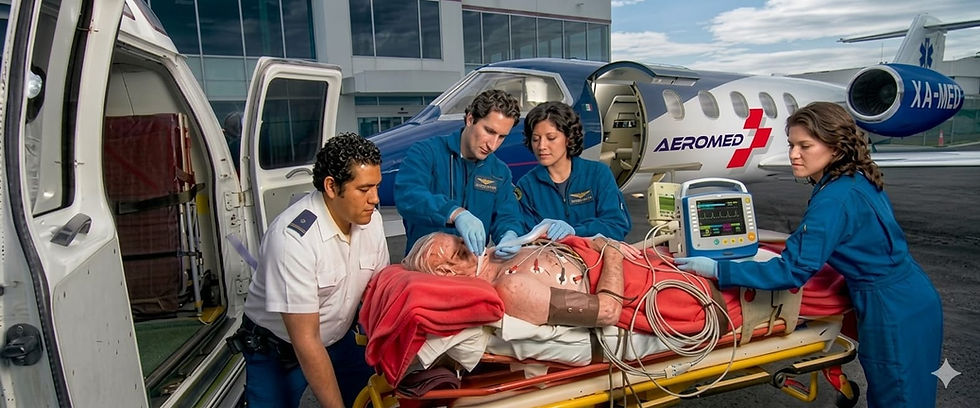

International Air Ambulance vs Local Transport: What’s the Difference?


When a medical emergency occurs, choosing the right type of transport can significantly impact patient outcomes. While local ambulance services are essential for immediate response, international air ambulance transport becomes critical when patients need advanced care across long distances or borders.
Understanding the differences between international air ambulance services and local medical transport helps patients, families, and healthcare providers make informed decisions during urgent situations.
What Is Local Medical Transport?
Local medical transport typically refers to ground ambulances or short-distance air transfers within a city or region. These services are commonly used for:
Emergency response within cities
Transfers between nearby hospitals
Non-emergency patient transport
Local ambulances are designed for quick response and stabilization rather than long-distance or specialized care.
What Is International Air Ambulance Transport?
International air ambulance transport involves transferring patients across countries or continents using medically equipped aircraft. These services are essential when:
Specialized treatment is unavailable locally
Patients need repatriation to their home country
Long-distance critical care transport is required
Providers like Aeromed Air Rescue offer global bedside-to-bedside services, ensuring continuous care throughout the journey.
Key Differences Between International and Local Transport
1. Distance and Coverage
Local transport is limited to short distances, typically within a city or region. In contrast, international air ambulances operate across countries and continents, covering thousands of miles in a single mission.
2. Level of Medical Care
Local ambulances provide emergency stabilization and basic life support. International air ambulances, however, function as flying intensive care units with advanced medical equipment and specialized teams.
Comparison of Local vs International Medical Transport
Feature | Local Transport | International Air Ambulance |
Coverage Area | City/Region | Global |
Transport Type | Ground/Helicopter | Jet Aircraft |
Medical Equipment | Basic to Advanced | ICU-Level |
Medical Staff | EMTs/Paramedics | Physicians, ICU Nurses |
Use Case | Short-distance emergencies | Long-distance critical care |
3. Speed and Response Time
Local ambulances respond quickly within minutes. However, international air ambulances are designed for rapid long-distance transport, often arranged within hours and capable of crossing borders efficiently.
4. Coordination and Logistics
Local transport involves minimal coordination. International air ambulance services require
complex logistics, including:
Flight planning
Medical clearances
International permits
Ground ambulance coordination
Experienced providers like Aeromed Air Rescue manage these processes seamlessly.
5. Cost Differences
One of the most significant differences is cost. Local transport is relatively affordable, while international air ambulance services are more expensive due to aircraft operation, medical teams, and global logistics.
Average Cost Comparison
Transport Type | Estimated Cost (USD) |
Local Ground Ambulance | $500 – $2,000 |
Local Air Ambulance (Helicopter) | $5,000 – $25,000 |
Short-Distance International Flight | $30,000 – $100,000 |
Long-Distance International Flight | $100,000 – $500,000+ |
When Should You Choose Local Transport?
Local medical transport is ideal when:
The patient is within reach of a nearby hospital
Immediate emergency response is required
The condition can be treated locally
These services are critical for initial stabilization and short-distance transfers.
When Is International Air Ambulance Necessary?
International air ambulance transport becomes necessary when:
Local facilities lack specialized treatment
The patient needs to return to their home country
Long-distance transfer is medically required
The patient cannot travel on commercial flights
In such cases, air ambulance services provide life-saving solutions.
Benefits of International Air Ambulance Services
International air ambulances offer several advantages:
Rapid long-distance transport
Access to specialized healthcare facilities
Continuous ICU-level care
Global coordination and support
These benefits make them essential for critical care situations.
Challenges in International Medical Transport
Despite its advantages, international transport involves challenges such as:
High costs
Complex regulations
Weather and logistical delays
Coordination across multiple countries
Professional providers overcome these challenges through expertise and global networks.
The Role of Advanced Medical Technology
Modern air ambulances are equipped with cutting-edge technology, including:
Advanced patient monitoring systems
Telemedicine capabilities
Life-support equipment
This ensures high-quality care even during long flights.
How Do You Choose the Right Transport Option?
Selecting between local and international transport depends on:
Patient condition
Distance to appropriate medical facility
Availability of specialized care
Urgency of the situation
Consulting medical professionals and experienced providers like Aeromed Air Rescue can help determine the best option.
Supporting Critical Care Journeys Across Every Distance
Both local medical transport and international air ambulance services play vital roles in healthcare systems. Local transport ensures immediate response and stabilization, while international air ambulances provide advanced, long-distance care for critically ill patients.
Understanding the differences between these services allows patients and families to make informed decisions during emergencies. As global travel and healthcare needs continue to expand, the importance of international air ambulance services will only grow.
With trusted providers like Aeromed Air Rescue, patients can access safe, efficient, and high-quality medical transport across borders ensuring they receive the care they need, wherever they are in the world.
FAQs
1. What is worldwide air medical transport?
Worldwide air medical transport is a service that uses medically equipped aircraft to transfer critically ill or injured patients across cities or countries for advanced medical care.
2. How does air medical transport support critical care patients?
It provides rapid access to specialized healthcare facilities, ICU-level care during transport, and continuous monitoring by trained medical professionals.
3. Who needs air medical transport services?
Patients with severe injuries, critical illnesses, or those located in remote areas or foreign countries often require air medical transport.
4. What equipment is used in air ambulances?
Air ambulances are equipped with ventilators, cardiac monitors, infusion pumps, oxygen systems, and other ICU-level medical devices.
5. Which companies provide global air medical transport services?
Providers like Aeromed Air Rescue offer international air ambulance services with advanced medical teams and aircraft.