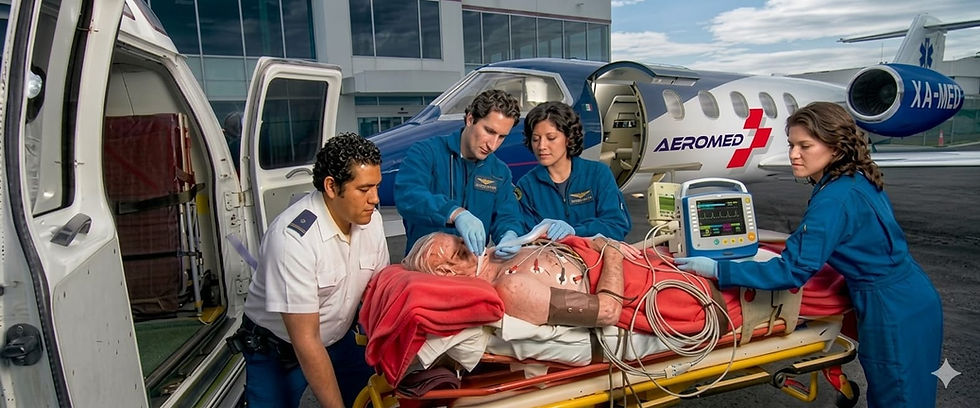

How Worldwide Air Medical Transport Supports Critical Care Needs

Updated: Apr 2

No more than ever, access to advanced healthcare is no longer limited by geography. When patients face life-threatening conditions far from specialized medical facilities, worldwide air medical transport becomes a critical solution. Providers like Aeromed Air Rescue deliver rapid, safe, and medically advanced transfers that bridge the gap between emergency situations and life-saving care.
Air medical transport is not just about moving patients - it is about delivering ICU-level care in the sky. Whether it’s a trauma patient, a neonatal emergency, or a medically fragile traveler, global air ambulance services ensure continuity of care from one bedside to another.
What Is Worldwide Air Medical Transport?
Worldwide air medical transport refers to the use of specially equipped aircraft to transfer patients across cities, countries, or continents while providing continuous medical care. These services operate 24/7 and are designed for both emergency and non-emergency situations.
Modern air ambulance providers offer:
Emergency medical evacuation (medevac)
Medical repatriation
Commercial stretcher transfers
Bed-to-bed patient coordination
Critical care transport
These aircraft are equipped like intensive care units (ICUs), featuring ventilators, cardiac monitors, oxygen systems, and specialized medications.
Why Air Medical Transport Is Essential for Critical Care
1. Time-Sensitive Emergency Response
In critical care scenarios such as strokes, cardiac arrest, or severe trauma, time is the most important factor. Air ambulances drastically reduce travel time compared to ground transportation, enabling faster access to specialized treatment.
Many providers can dispatch aircraft within hours of confirmation, ensuring rapid intervention during emergencies.
2. Access to Specialized Medical Facilities
Not all hospitals are equipped to handle complex cases. Air medical transport allows patients to be transferred to advanced facilities with specialized departments such as:
Cardiac surgery units
Burn centers
Neonatal intensive care units (NICUs)
Trauma centers
This capability is particularly important for patients in remote or underserved areas.
Key Benefits of Worldwide Air Medical Transport
Benefit | Description |
Speed | Rapid transfer across long distances |
Advanced Care | ICU-level medical equipment onboard |
Global Reach | Access to hospitals worldwide |
Continuity of Care | Bed-to-bed medical coordination |
24/7 Availability | Immediate response anytime |
Core Services That Support Critical Care Needs
1. Emergency Medevac Services
Medical evacuation is used for critically ill or injured patients who require immediate transfer. These flights are staffed by highly trained flight nurses and paramedics who specialize in in-flight critical care.
2. Medical Repatriation
When patients fall ill or are injured abroad, medical repatriation ensures they can return to their home country for continued treatment. This service includes full coordination with hospitals, insurance providers, and ground transport teams.
3. Commercial Medical Escort & Stretcher Services
For stable patients who still require monitoring, commercial airline stretcher services provide a cost-effective alternative. These include medical supervision and necessary equipment during travel.
4. Neonatal and Pediatric Transport
Transporting infants and children requires specialized equipment such as incubators and pediatric ventilators. Dedicated neonatal teams ensure safe transfers for the most vulnerable patients.
5. Bed-to-Bed Patient Transfer
One of the most valuable features is seamless coordination—from the originating hospital bed to the receiving facility. This includes:
Ground ambulance arrangements
Medical documentation
Flight logistics
In-flight care
Such integrated services reduce stress for families and ensure continuity of care.
Advanced Medical Capabilities in the Air
Air ambulances are designed to function as flying ICUs. Key onboard capabilities include:
Cardiac monitoring and defibrillation
Mechanical ventilation
Infusion pumps for medication delivery
Oxygen therapy systems
Neonatal incubators
These features allow medical teams to stabilize patients mid-flight and handle complex conditions effectively.
Types of Patients Supported by Air Medical Transport
Patient Type | Typical Needs |
Trauma Patients | Rapid evacuation, surgical access |
Cardiac Patients | Continuous monitoring, ICU care |
Neonatal Cases | Incubators, pediatric specialists |
COVID/Respiratory | Ventilator support, isolation |
Elderly/Chronic | Assisted mobility, oxygen support |
The Role of Medical Teams in Flight
Highly trained medical professionals are at the heart of air medical transport. These teams often include:
Critical care nurses
Flight paramedics
Physicians (if required)
They are trained to operate in high-altitude environments and manage emergencies in confined aircraft spaces. Their expertise ensures patient stability throughout the journey.
Global Coordination and Logistics
Worldwide air medical transport involves complex coordination across multiple systems, including:
International aviation regulations
Hospital communication
Immigration and customs clearance
Insurance approvals
Experienced providers manage these logistics seamlessly, ensuring that patients receive uninterrupted care regardless of borders.
Safety and Accreditation Standards
Safety is a top priority in air medical transport. Leading providers follow strict aviation and medical protocols, including:
Certified aircraft and pilots
Regular crew training and simulations
Compliance with international medical standards
These measures ensure high-quality care and minimize risks during transport.
How Air Medical Transport Supports Families
Beyond medical care, air ambulance services also support families during stressful times by:
Providing real-time updates
Handling paperwork and logistics
Offering compassionate communication
Ensuring patient comfort and dignity
Companies like Aeromed Air Rescue emphasize patient-centered care, making the process smoother for both patients and their loved ones.
When Should You Consider Air Medical Transport?
Air medical transport is recommended when:
A patient requires urgent specialized treatment unavailable locally
Long-distance travel is medically unsafe via standard methods
A patient needs repatriation after illness or injury abroad
Continuous medical supervision is required during transit
The Future of Emergency Medical Transport
Worldwide air medical transport plays a vital role in modern healthcare by ensuring that critically ill patients receive timely, specialized, and continuous care - regardless of location. With advanced aircraft, expert medical teams, and seamless global coordination, services like Aeromed Air Rescue are transforming how patients access life-saving treatment.
As global travel increases and healthcare demands evolve, the importance of reliable air ambulance services will continue to grow. For patients and families facing medical emergencies, these services provide not just transportation - but a lifeline to survival and recovery.
FAQs
1. What is worldwide air medical transport?
Worldwide air medical transport is a service that uses medically equipped aircraft to transfer critically ill or injured patients across cities or countries for advanced medical care.
2. How does air medical transport support critical care patients?
It provides rapid access to specialized healthcare facilities, ICU-level care during transport, and continuous monitoring by trained medical professionals.
3. Who needs air medical transport services?
Patients with severe injuries, critical illnesses, or those located in remote areas or foreign countries often require air medical transport.
4. What equipment is used in air ambulances?
Air ambulances are equipped with ventilators, cardiac monitors, infusion pumps, oxygen systems, and other ICU-level medical devices.
5. Which companies provide global air medical transport services?
Providers like Aeromed Air Rescue offer international air ambulance services with advanced medical teams and aircraft.