
Bed-to-Bed Medical Transport: How Critical Patients Travel Safely Across Borders (Mexico to US)


When a medical emergency happens far from home, families often face a difficult question: how can a critically ill patient safely travel from Mexico to the United States for advanced treatment? In many cases, commercial flights are not medically possible, especially for patients requiring intensive monitoring, ventilators, cardiac support, or trauma care. That is where bed-to-bed medical transport becomes essential.
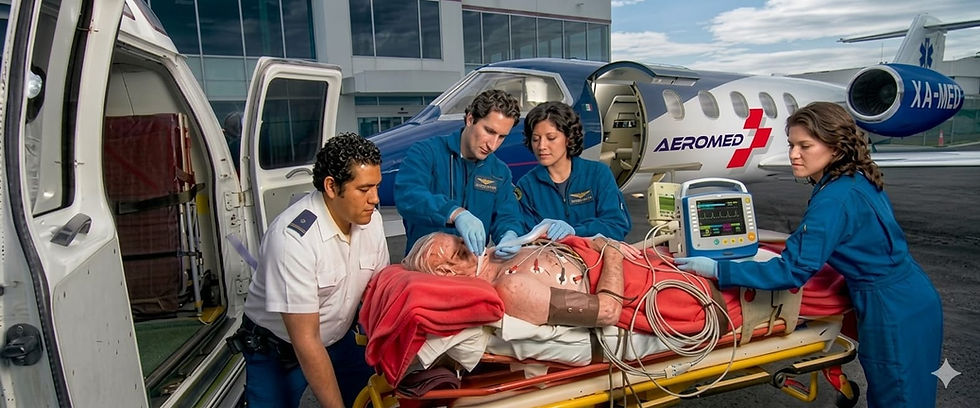
Companies such as Aeromed Air Rescue specialize in international medical evacuation services that coordinate every stage of patient transport, from the originating hospital in Mexico to the receiving medical facility in the United States. These services are designed to maintain continuity of care while minimizing medical risks during travel.
What Is Bed-to-Bed Medical Transport?
Bed-to-bed medical transport refers to a complete patient transfer process where the medical team manages every stage of transportation. Instead of simply arranging a flight, the provider coordinates ground ambulances, hospital communication, airport logistics, medical clearances, flight staffing, and bedside monitoring throughout the journey.
The process usually begins at the patient’s current location, whether it is a hospital, rehabilitation center, or private residence in Mexico. A critical care team stabilizes the patient before departure and accompanies them throughout the transport until arrival at the receiving medical facility in the United States.
This model is especially important for patients with:
Severe trauma injuries
Cardiac emergencies
Neurological conditions
Respiratory failure
Organ transplant complications
High-risk infections
Neonatal and pediatric critical care needs
Why Cross-Border Medical Transport Requires Specialized Planning
Transporting a critically ill patient internationally involves much more than booking an aircraft. Medical evacuation teams must coordinate with hospitals, physicians, immigration authorities, and airport operations on both sides of the border.
The challenge becomes even greater when patients require intensive care during flight. Air ambulance providers often configure aircraft as flying ICUs equipped with advanced life-support systems, oxygen management, cardiac monitoring, ventilators, infusion pumps, and emergency medications.
Cross-Border Medical Transport Workflow
Transport Stage | Purpose | Medical Priority |
Initial Patient Assessment | Evaluate stability and travel readiness | Prevent in-transit complications |
Ground Ambulance Pickup | Move patient safely to airport | Continuous bedside monitoring |
Air Ambulance Transfer | Intensive medical flight care | ICU-level treatment during travel |
Border & Flight Coordination | Handle permits and logistics | Avoid transport delays |
US Hospital Admission | Transfer patient directly to care team | Maintain continuity of care |
Many providers operating between Mexico and the US maintain multilingual coordinators who communicate with hospitals, families, and insurers throughout the transfer process.
How Air Ambulance Teams Protect Critical Patients During Travel
The biggest concern during international medical transport is patient stability. Changes in altitude, cabin pressure, and travel duration can significantly affect critically ill individuals. This is why experienced medical flight teams are essential.
According to services described by Aeromed Air Rescue, medical transport teams may include:
Critical care physicians
Flight nurses
Advanced paramedics
Respiratory specialists
ECMO and cardiac support personnel
Aircraft used for air ambulance transport are typically outfitted with ICU-level equipment and designed specifically for medical evacuations.
Common Equipment Used During International Medical Flights
Medical Equipment | Purpose During Transport |
Ventilators | Respiratory support for critical patients |
Cardiac Monitors | Continuous heart rhythm monitoring |
Infusion Pumps | Controlled medication delivery |
Oxygen Systems | Stable oxygen management |
Portable ICU Setup | Advanced bedside treatment in flight |
ECMO Support Equipment | Life support for severe cardiac or respiratory failure |
These systems allow patients to receive uninterrupted medical attention while traveling long distances between countries.
When Patients Need Medical Evacuation From Mexico to the US
Mexico remains a major destination for tourism, retirement communities, business travel, and specialized medical procedures. However, when emergencies occur, local facilities may not always offer the advanced care available in major US medical centers.
Medical evacuations are often arranged for:
American tourists injured during travel
Elderly patients needing specialized cardiac care
Trauma victims requiring surgery in the US
Patients with neurological emergencies
Individuals requiring long-term rehabilitation
Pediatric intensive care cases
Some patients are also transferred because their insurance provider recommends treatment at a preferred US hospital network.
The Importance of Bedside-to-Bedside Coordination
One of the most stressful parts of a medical emergency is managing logistics during a crisis. Families are often overwhelmed by hospital paperwork, transportation arrangements, and communication barriers.
Bedside-to-bedside coordination helps reduce that burden by assigning a dedicated flight coordination team to manage:
Medical records transfer
Physician communication
Flight scheduling
Ambulance coordination
Insurance assistance
Customs and international documentation
Receiving hospital admission planning
This approach helps prevent gaps in care and ensures that the patient remains medically supervised throughout the journey.
Why Experience Matters in International Air Ambulance Services
Cross-border medical transport requires both aviation expertise and critical care knowledge. Experienced providers understand how to coordinate complex international transfers while maintaining patient safety.
Many air ambulance organizations operating between Mexico and the United States have decades of experience handling emergency evacuations and non-emergency repatriation flights. Some providers also coordinate helicopter transfers, commercial airline stretcher arrangements, and long-distance international evacuations.
An experienced medical transport provider can also identify potential complications before departure, including:
Airport accessibility limitations
Weather-related delays
Oxygen requirements at altitude
Border clearance timing
Specialized hospital admission requirements
These details are critical when transporting high-risk patients.
Insurance and Financial Coordination
Medical air transport can be expensive, especially for international transfers. However, many providers work directly with insurance carriers to verify benefits and coordinate approvals.
According to Aeromed Air Rescue, some services assist with:
Insurance preauthorization
Claims coordination
Coverage verification
Direct insurance billing
Appeals support for denied claims
This assistance can help families focus on patient care rather than financial paperwork during an emergency.
Choosing the Right Medical Transport Provider
Not every medical transport company offers the same level of care. Families should look for providers experienced in international bedside-to-bedside coordination between Mexico and the United States.
Important factors include:
Availability of ICU-equipped aircraft
Experienced critical care staff
24/7 flight coordination
International transport experience
Insurance coordination services
Multilingual communication support
Ground ambulance integration
Providers such as Aeromed Air Rescue emphasize complete medical transport coordination designed to simplify complex international transfers while maintaining patient safety.
Bed-to-Bed Air Medical Transport from Mexico to the United States
Bed-to-bed medical transport plays a critical role when severely ill or injured patients need to travel safely from Mexico to the United States. These services combine critical care medicine, aviation logistics, and international coordination to ensure patients receive uninterrupted medical attention throughout the journey.
For families facing a medical emergency abroad, having an experienced air ambulance provider can make the difference between a chaotic transfer and a carefully managed transition to advanced care. From ICU-equipped aircraft to specialized medical teams and bedside coordination, international medical evacuation services help patients travel safely when every second matters.
FAQs
What is bed-to-bed medical transport?
It is a complete medical transfer service where a patient is moved from one hospital bed to another with continuous medical care throughout the journey.
Who needs medical transport from Mexico to the US?
Critically ill patients, trauma cases, cardiac emergencies, and individuals needing advanced treatment in US hospitals often require air ambulance transfer.
Is medical care provided during the flight?
Yes, ICU-trained medical teams monitor patients and provide advanced life support during the entire air ambulance journey.
How are patients transferred across borders safely?
Teams coordinate ground ambulances, air transport, hospital communication, and customs clearance to ensure uninterrupted medical care.
Does insurance cover international medical transport?
Some insurance plans may cover it, but approval depends on the policy. Providers often assist with verification and claims coordination.