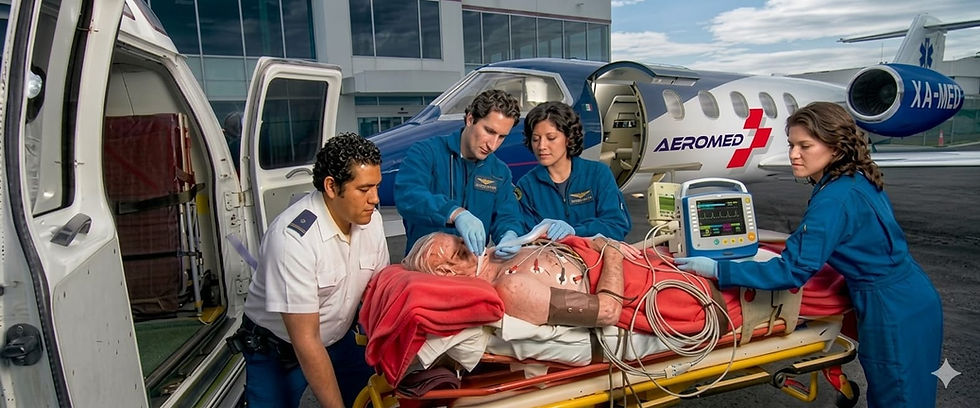

11 Onsite Health & Safety Tips for Emergency Air Rescue Operations

Updated: Feb 12

Emergency medical and air rescue operations demand precision, speed, and uncompromising safety standards. Whether responding to a roadside trauma, offshore incident, disaster zone, or international medical evacuation, onsite health and safety practices directly impact patient outcomes and crew survival. This 2026 guide outlines 11 essential onsite health and safety tips for emergency medical and air rescue operations, with a focus on international air ambulance, air medical transport service, critical care flight transport, and emergency air ambulance solutions.
Why Are Onsite Health and Safety Measures Critical in Air Rescue Operations?
Onsite health and safety protocols protect patients, flight crews, medical teams, and ground personnel during high-risk operations. Emergency air ambulance missions often take place in uncontrolled environments such as accident scenes, remote terrain, disaster zones, or crowded urban areas. Without strict safety procedures, the risk of secondary injuries, operational delays, or mission failure increases significantly.
Strong safety practices also support compliance with aviation medical standards, occupational health regulations, and international medical evacuation guidelines.
1. How Should Scene Safety Be Assessed Before Any Medical Intervention?
Before patient contact begins, the rescue team must evaluate scene safety. This includes identifying hazards such as traffic, unstable structures, fuel spills, fire risks, hostile environments, or adverse weather conditions.
In international air ambulance and global medical evacuation scenarios, unsafe landing zones or unsecured areas can delay transport. A designated safety officer or team leader should confirm the scene is secure before allowing medical personnel to proceed.
2. Why Is Proper Personal Protective Equipment Mandatory?
Personal protective equipment (PPE) is essential in emergency medical and air rescue operations. Gloves, helmets, eye protection, high-visibility clothing, hearing protection, and respiratory equipment reduce the risk of infection, trauma, and environmental exposure.
In air medical transport service missions, PPE also protects crews from bloodborne pathogens and airborne contaminants. Proper use and disposal of PPE are fundamental onsite health and safety requirements.
3. How Does Effective Communication Improve Safety During Rescue Operations?
Clear communication is vital during emergency air ambulance operations. Miscommunication can result in medical errors, unsafe aircraft movement, or delays in patient care.
Teams should use standardized communication protocols, hand signals near aircraft, and designated radio channels. In international operations, language barriers must be anticipated, and interpreters or multilingual staff should be available when possible.
4. Why Must Aircraft Safety Zones Be Strictly Enforced?
Aircraft safety zones protect personnel from rotor wash, propeller hazards, and engine exhaust. Only essential crew members should enter these zones, and all movement must be directed by trained aviation personnel.
In critical care flight transport missions, patients are often transferred in unstable conditions, making strict adherence to aircraft safety rules essential for both medical and aviation teams.
5. How Should Patients Be Properly Secured During Transport?
Patient securement is a core safety requirement in air medical transport services. Improperly secured patients can suffer worsened injuries during takeoff, landing, or turbulence.
Medical teams must ensure stretchers, harnesses, cervical immobilization devices, and monitoring equipment are correctly positioned and locked. This is especially important in global medical evacuation flights where travel distances may be long.
6. Why Is Crew Fatigue Management a Safety Priority?
Emergency medical and air rescue crews often work long hours under intense pressure. Fatigue increases the risk of errors, slower reaction times, and poor decision-making.
Air ambulance operators must enforce duty time limits, rest periods, and rotation schedules. In international air ambulance operations, fatigue management is essential due to long flight durations and time zone changes.
7. How Should Hazardous Materials Be Managed Onsite?
Emergency scenes may involve hazardous materials such as fuel, chemicals, biological agents, or damaged batteries. Rescue teams must identify and isolate hazardous substances before patient contact or aircraft landing.
Proper hazardous materials training protects crews and prevents contamination of aircraft cabins during emergency air ambulance solutions and critical care flight transport missions.
8. Why Is Continuous Risk Assessment Necessary During Operations?
Conditions at emergency scenes can change rapidly. Weather shifts, crowd movement, fire spread, or structural instability can introduce new risks.
Teams must continuously reassess the environment throughout the operation. In air medical transport service missions, pilots and medical crews must remain in constant communication to adjust plans if conditions deteriorate.
9. How Do Infection Control Protocols Protect Patients and Crews?
Infection control is a major onsite safety concern, especially during global medical evacuation and international air ambulance missions. Crews may encounter patients with contagious diseases, open wounds, or compromised immune systems.
Strict sanitation protocols, equipment disinfection, and proper waste disposal prevent cross-contamination and protect both patients and medical personnel.
10. Why Is Training and Simulation Critical for Emergency Air Rescue Safety?
Regular training and simulation exercises prepare crews for real-world emergencies. These drills improve coordination between medical teams, pilots, ground staff, and emergency responders.
Training ensures compliance with aviation regulations, emergency medical standards, and international air ambulance safety guidelines. Well-trained teams respond faster, safer, and more effectively under pressure.
11. How Does Post-Mission Review Improve Future Safety?
After every mission, teams should conduct a structured debriefing. Reviewing what worked well and what could be improved helps identify safety gaps, equipment issues, and communication breakdowns.
Post-mission reviews are essential for continuous improvement in emergency air ambulance solutions and critical care flight transport operations. Lessons learned from one mission can prevent accidents in future deployments.
How Do These Safety Tips Apply to International Air Ambulance Operations?
International air ambulance missions involve additional challenges, including cross-border regulations, long flight durations, and coordination with foreign medical facilities. Onsite safety protocols ensure seamless transitions from ground care to air transport and onward to receiving hospitals.
By following these 11 safety tips, air medical transport services can reduce risks, protect crews, and deliver high-quality patient care during global medical evacuation operations.
What Are the Risks of Ignoring Onsite Safety in Air Rescue Operations?
Failure to follow onsite safety measures can result in crew injuries, aircraft damage, delayed patient care, legal liability, and mission failure. In the worst cases, safety lapses can lead to fatal accidents.
A strong safety culture is not optional—it is a fundamental requirement for emergency medical and air rescue operations in 2026 and beyond.
Onsite Health and Safety: Foundations of Success
Onsite health and safety are the foundation of successful emergency medical and air rescue operations. From scene assessment and PPE use to patient securement and post-mission review, each safety measure plays a vital role in protecting lives.
As demand for international air ambulance services, air medical transport service missions, and global medical evacuation continues to grow, strict adherence to safety protocols ensures that emergency air ambulance solutions remain reliable, effective, and lifesaving. By implementing these 11 onsite health and safety tips, rescue organizations can safeguard their teams, their patients, and their missions—no matter where the emergency occurs.
For time-critical medical emergencies, Aeromed Air Rescue provides international air ambulance and critical care flight transport worldwide. Their expert teams and advanced aircraft support safe global medical evacuation and emergency air ambulance solutions.